

Śraddhā-vīrya-smṛti-samādhi-prajñā-pūrvaka itareṣām In Sutra 1.19, Patanjali described beings such as Videhas and Prakṛtilayas, for whom a state of Samadhi can arise through their particular…
Continue Reading....Month: October 2026
Yoga Sutra 1.19 — Bhava Pratyaya: When Samadhi Arises Through a State of Being
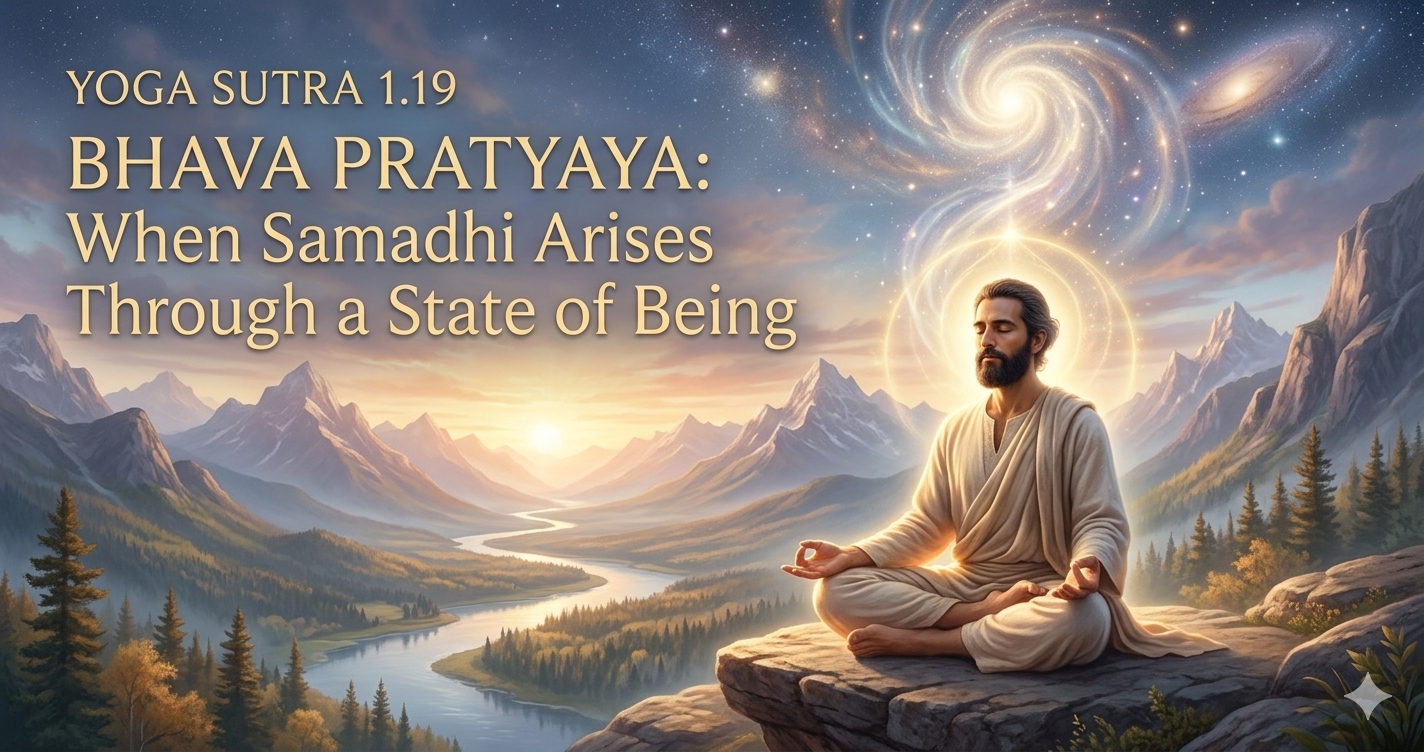
Bhava-pratyayo videha-prakṛti-layānām After describing Asamprajñāta Samadhi in Sutra 1.18, Patanjali now makes an important distinction. Not everyone who appears to be in a highly absorbed…
Continue Reading....Yoga Sutra 1.18 — Asamprajñāta Samadhi: Beyond Even the Object of Meditation
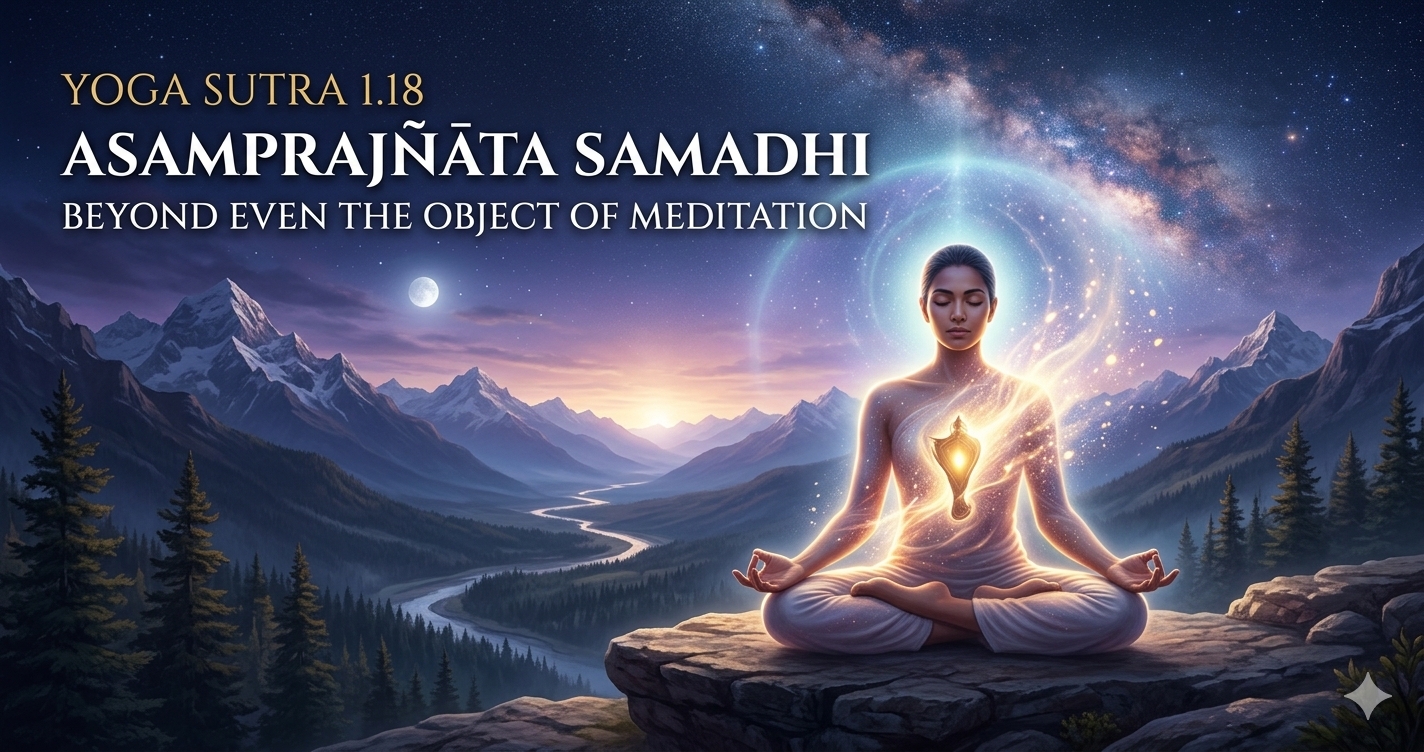
Virāma-pratyayābhyāsa-pūrvaḥ saṁskāra-śeṣo ’nyaḥ Patanjali now takes us one step beyond the state described in Sutra 1.17. In Samprajñāta Samadhi, the mind becomes deeply absorbed…
Continue Reading....Yoga Sutra 1.17 — Samprajñāta Samadhi: The Four Stages of Deep Absorption
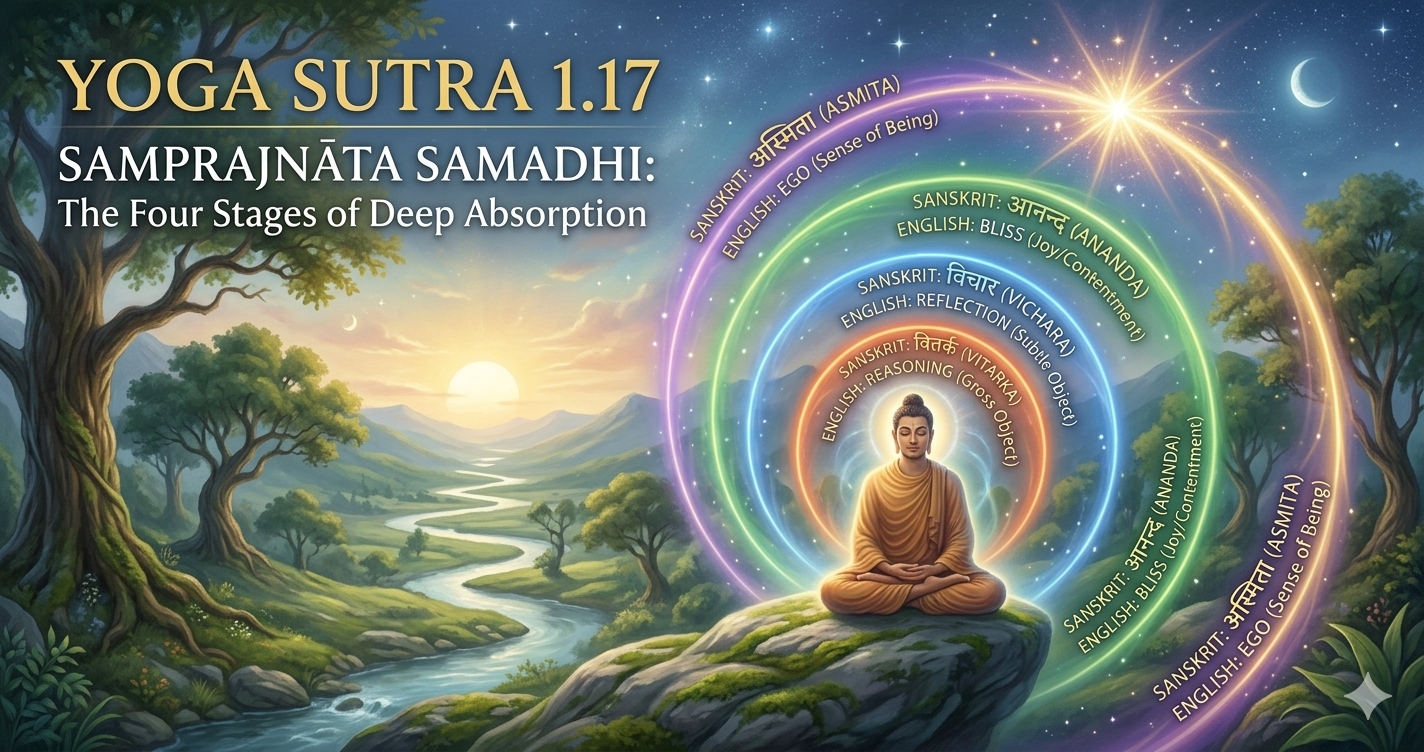
Vitarka-vicārānandāsmitārūpānugamāt samprajñātaḥ Patanjali now takes us deeper into the meaning of Samadhi. After explaining Abhyasa and Vairagya, he begins to describe what happens when…
Continue Reading....Yoga Sutra 1.16 — Para Vairagya: Freedom Beyond the Three Gunas
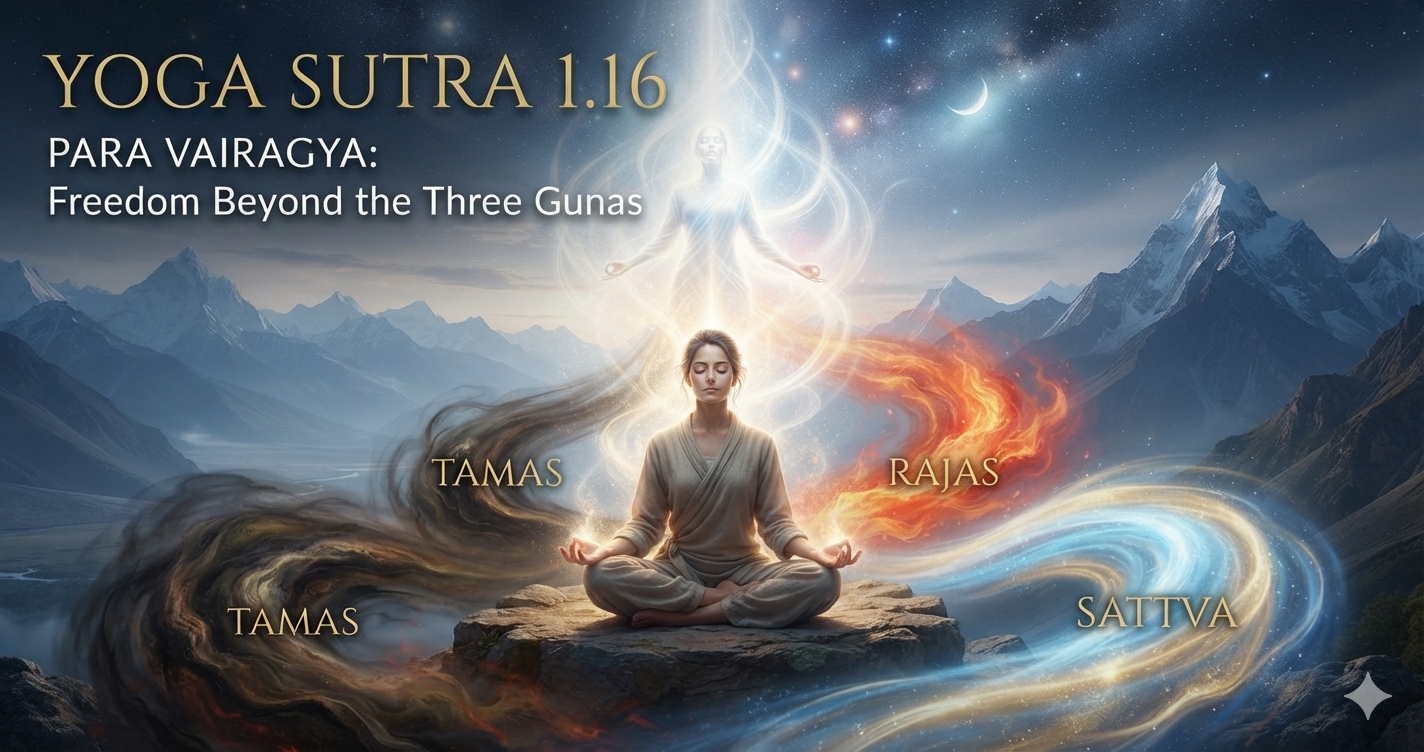
Tat-paraṁ puruṣakhyāter guṇa-vaitṛṣṇyam Meaning: The highest form of detachment is freedom from craving even for the three Gunas, arising from clear knowledge of Purusha.…
Continue Reading....Yoga Sutra 1.15 — Vairagya: The Art of Living Fully Without Attachment

Dṛṣṭānuśravika-viṣaya-vitr̥ṣṇasya vaśīkāra-saṁjñā vairāgyam Meaning: Vairagya is the state of mastery in one who is free from craving for objects and experiences that have been seen…
Continue Reading....Yoga Sutra 1.14 — Practice Becomes Firm Through Time, Continuity and Devotion
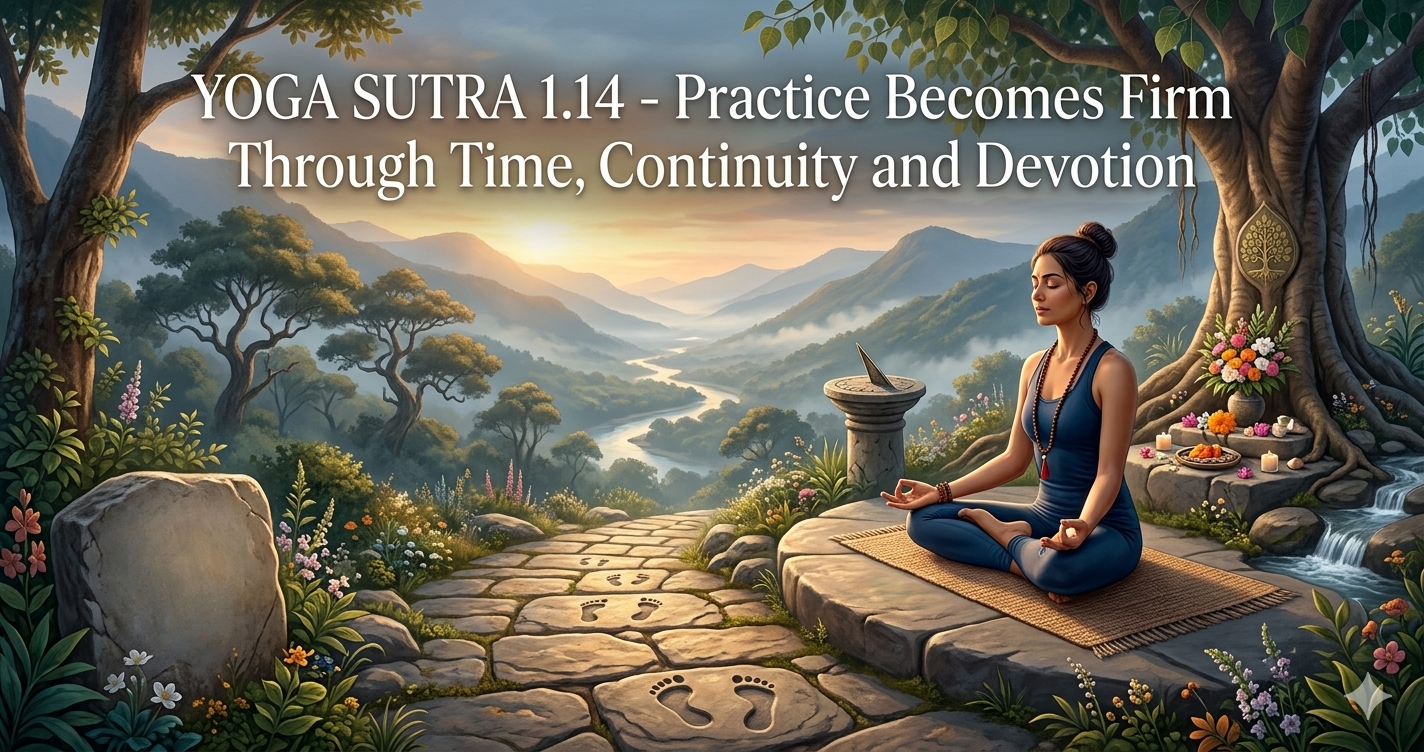
Sa tu dīrgha-kāla-nairantarya-satkārāsevito dṛḍha-bhūmiḥ Meaning: That practice becomes firmly established when it is cultivated for a long time, without interruption, and with sincere dedication and…
Continue Reading....Yoga Sutra 1.13 — Abhyasa: The Practice of Remaining Steady
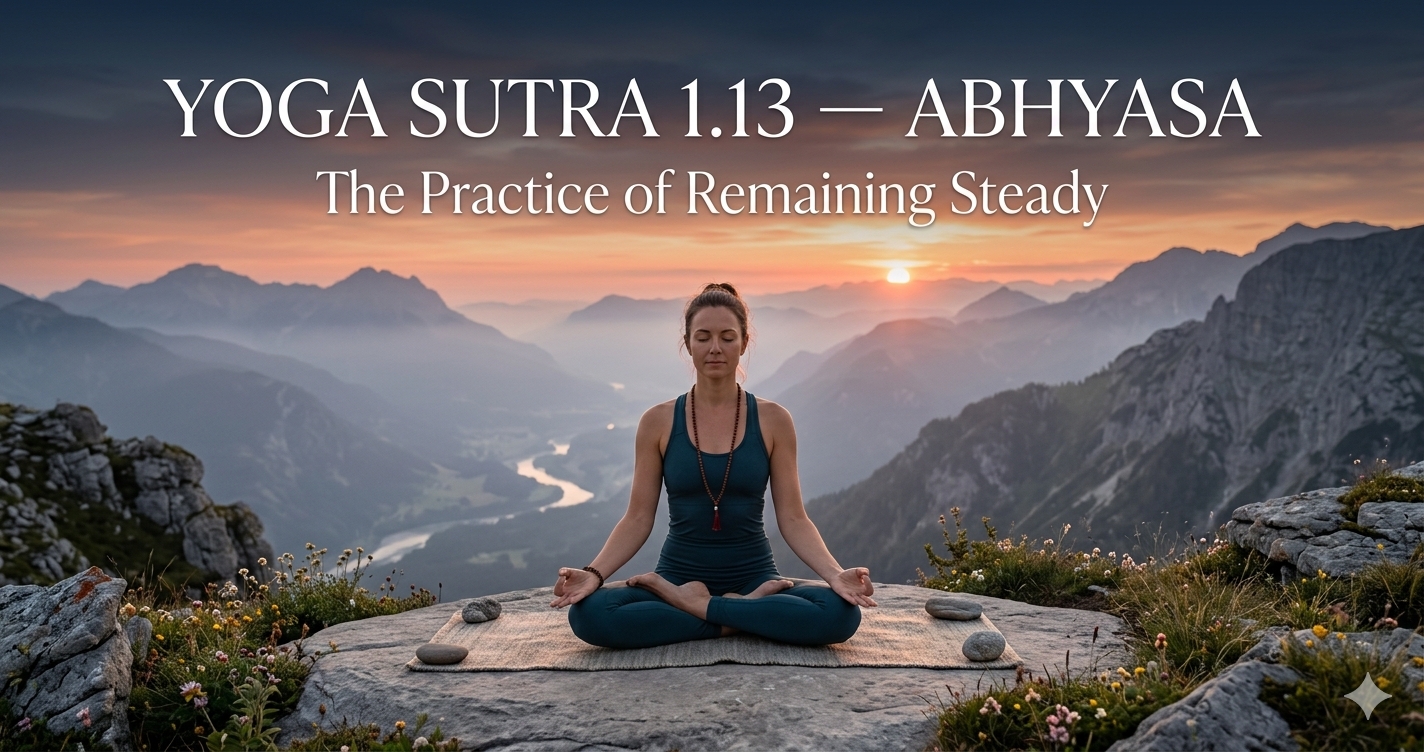
Tatra sthitau yatno ‘bhyāsaḥ Meaning: Abhyasa is the effort to remain established in that state of steadiness. In the previous Sutra, Patanjali introduced two essential…
Continue Reading....Yoga Sutra 1.12 — Abhyasa and Vairagya: The Two Foundations of a Steady Mind
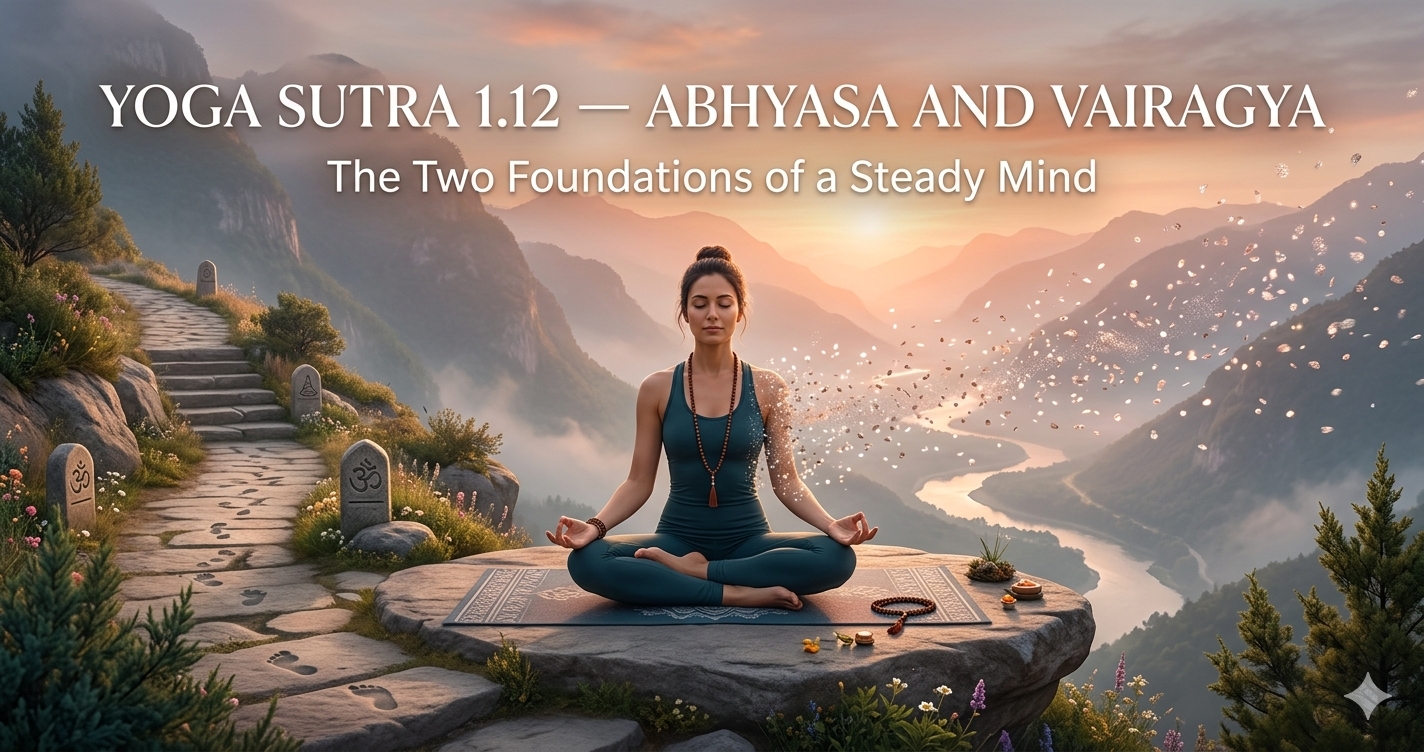
Abhyāsa-vairāgyābhyāṁ tan-nirodhaḥ Meaning: The modifications of the mind are restrained through Abhyasa — consistent practice — and Vairagya — non-attachment. Until now, Patanjali has been…
Continue Reading....Yoga Sutra 1.11 — Smriti: When the Past Shapes the Present

Anubhūta-viṣayāsampramoṣaḥ smṛtiḥ Meaning: Smriti, or memory, is the retention of an experienced object or experience, allowing it to be recalled. With this Sutra, Patanjali introduces…
Continue Reading....