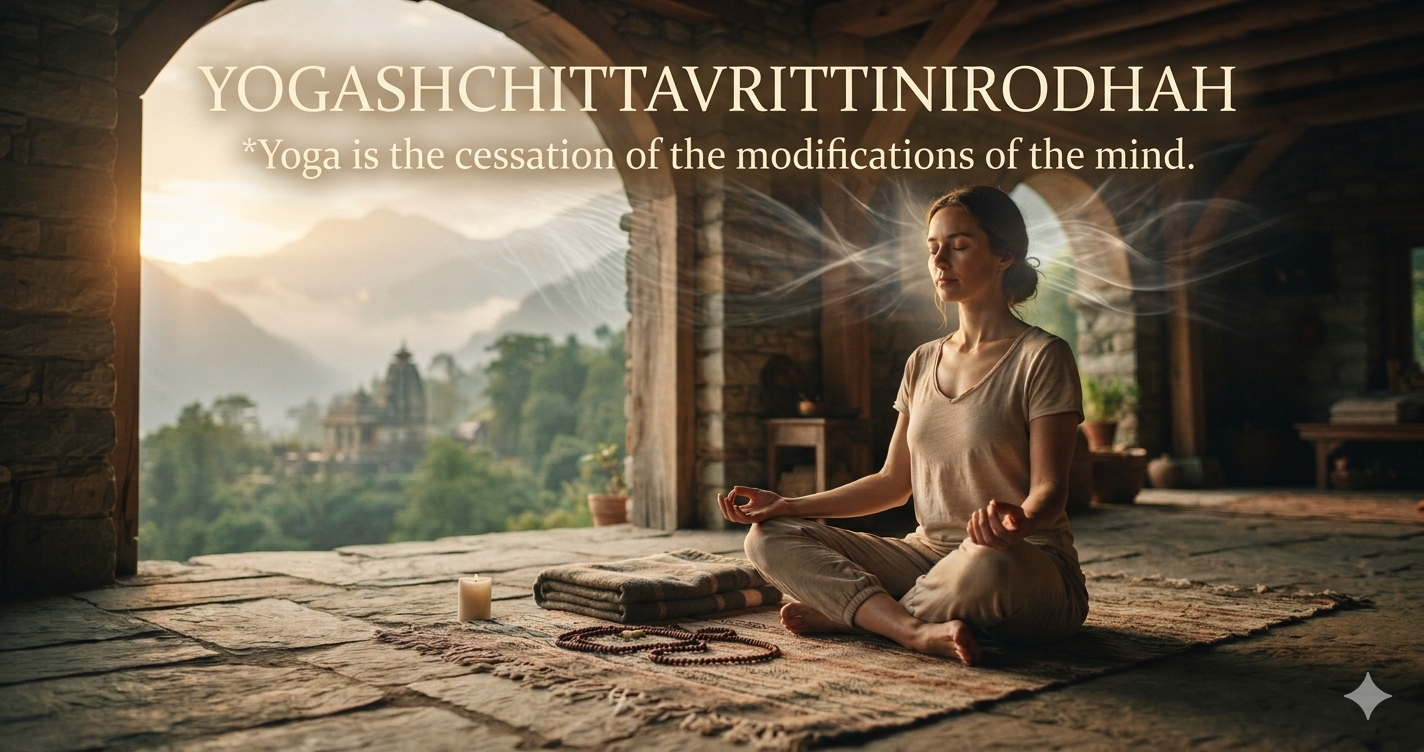
It means Yoga is helping to takeaway fluctuations of mind
Understanding the Three Gunas: Sattva, Rajas and Tamas
According to Samkhya philosophy, everything in nature is influenced by three fundamental qualities, known as the Gunas—Sattva, Rajas and Tamas. These qualities also influence our mind, thoughts, emotions and behaviour.
We all experience all three Gunas. The balance between them can change depending on our lifestyle, environment, experiences and state of mind.
Tamas is associated with inertia, heaviness and lack of clarity. When Tamas dominates, we may feel lazy, confused, distracted or unmotivated. It can show up as self-doubt, dependency, attachment, apathy, guilt, irritation or a tendency to avoid action.
Rajas represents energy, movement and activity. When Rajas is dominant, the mind can become restless and constantly driven to achieve or do more. It can bring ambition, passion and dynamism, but when excessive, it may also lead to dissatisfaction, impatience, greed, ego, stress and constant mental activity.
Sattva represents clarity, harmony and balance. When Sattva predominates, the mind tends to become calmer, more objective and disciplined. It supports awareness, wisdom, creativity, positivity, inner strength and a sense of harmony.
None of these three qualities needs to be viewed simply as “good” or “bad.” Each has its place and purpose. The important part is developing the awareness to recognise what is influencing us at a particular moment and learning to work with it wisely.
For example, Rajas can give us the energy to take action, while Tamas can remind us that the body and mind sometimes need rest. Sattva helps bring clarity so that we can use our energy and rest in a balanced way.
As you read this, you may recognise all three qualities within yourself at different times and in different situations.
The more important question is not “Which Guna am I?” but:
“Which state of mind do I want to cultivate more often?”
This is where the teachings of Patanjali’s Yoga Sutras become deeply relevant. Yoga offers a systematic approach to understanding and working with the mind, helping us develop greater awareness, discipline and balance.
So, pause for a moment and observe yourself.
What state of mind are you starting from today—and where would you like to move towards?
Share your thoughts in the comments.
Tada here means at the time of concentration,
Drashtuh is our own self here
Swarupe is own nature
Awasthanam is being in that state
In this sutra maharshri Patanjali is explaining us that as we start identifying the vritti or start to know our real self and begin to be it, after knowing verse 1.2.. the chatter or the disturbing thoughts that distracts us all the time and make us behave differently from our real nature , now starts becomes still.
Deep down inside all of us there is an urge to know our soul.
But as we are caught up with the surface personality, we are unable to identify this personality.
As the process of concentration begins ,We more and more start to being in the real state realizing that we are a part of the nature. And not we think we actually are. Our brain is switching to and fro from being two identities of one self: 1. created by the information we have from parents, teachers, books, achievements, etc. and telling us this is you and 2. on the other side as the realization of your true self or existence in nature is . It is the same person seeing him self in 2 identies and progressing to be the real self as per in nature.