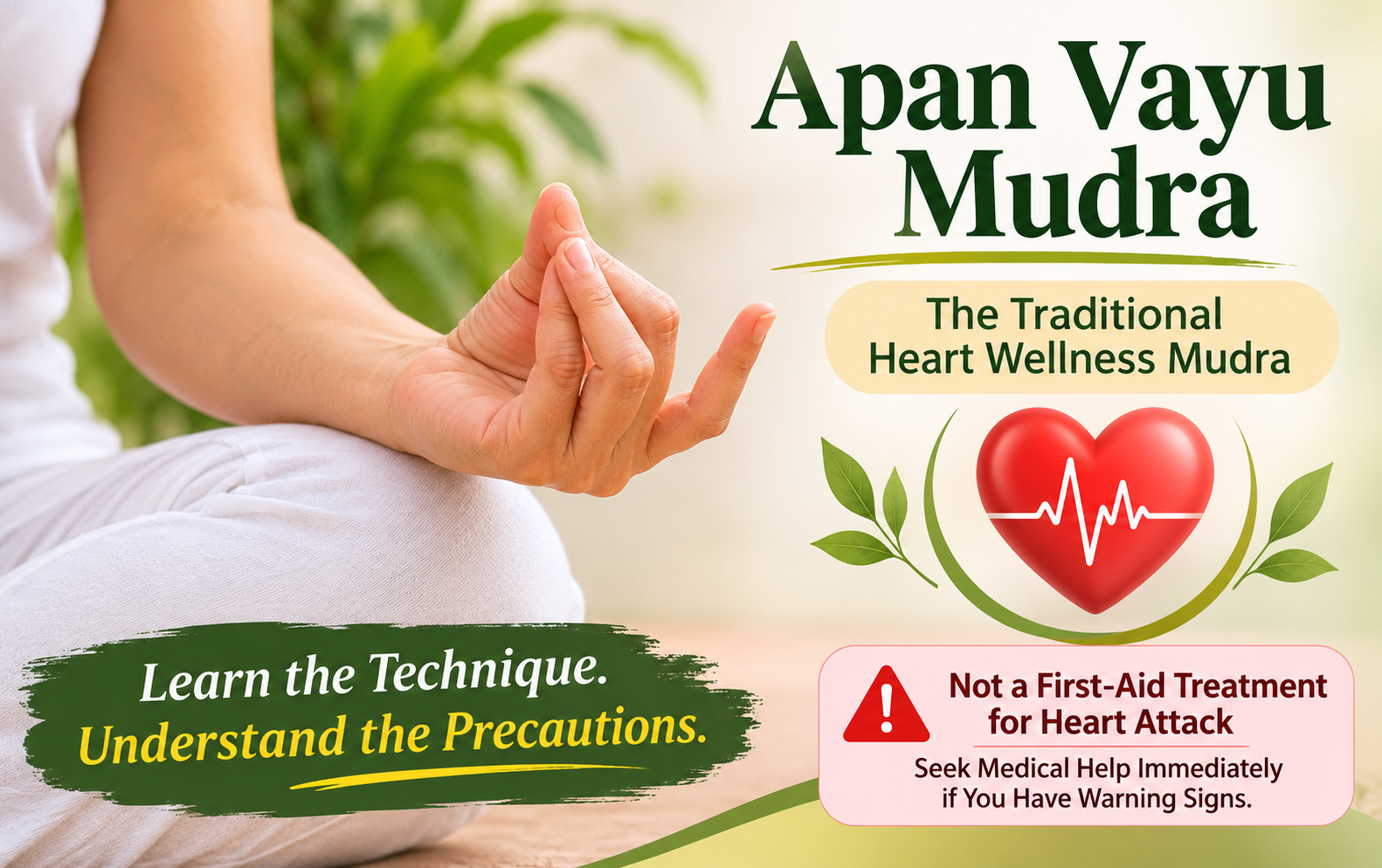
It is traditionally associated with heart wellness and is sometimes referred to as a supportive practice during heart-related discomfort. But what exactly is this mudra? How is it performed? And what should you know about its connection with heart health?
Let’s understand it.
1. What is Apan Vayu Mudra?
Apan Vayu Mudra is a combination of two mudras: Apana Mudra and Vayu Mudra.
In yogic tradition, the five fingers represent the five elements:
- Thumb – Fire (Agni)
- Index finger – Air (Vayu)
- Middle finger – Space (Akash)
- Ring finger – Earth (Prithvi)
- Little finger – Water (Jal)
Apan Vayu Mudra brings together the fire, air, space and earth elements through a specific arrangement of the fingers.
Traditionally, it is believed to help balance the Vayu (air) element and support the body’s natural energy balance.
2. Why is it called Mrit-Sanjeevani Mudra?
The word Mrit-Sanjeevani has a powerful traditional meaning:
- Mrit means death.
- Sanjeevani refers to something that restores or gives life.
This name reflects the traditional belief in the restorative significance of this mudra.
In traditional yoga and mudra practices, Apan Vayu Mudra is associated with heart wellness and is sometimes described as a supportive practice for maintaining cardiovascular well-being.
However, there is no established clinical evidence that this mudra can reverse a heart attack, open blocked arteries or prevent cardiac arrest. It must never be considered a substitute for emergency medical treatment.
3. How to Practice Apan Vayu Mudra
The practice is simple and does not require any equipment.
Steps:
- Sit comfortably in Sukhasana, Vajrasana or on a chair.
- Keep your spine comfortably upright and relax your shoulders.
- Fold your index finger towards the base of your thumb.
- Bring the tips of your middle and ring fingers to touch the tip of your thumb.
- Keep your little finger extended.
- Rest your hands on your thighs with your palms facing upwards.
- Breathe naturally and remain relaxed.
Practice gently without applying pressure to the fingers.
For a regular wellness routine, you may practice for a few minutes at a comfortable pace, provided it is suitable for you.
4. Traditional Benefits of Apan Vayu Mudra
In traditional yogic understanding, Apan Vayu Mudra is associated with the following:
Heart and Physical Wellness
- Traditionally associated with supporting heart health.
- Believed to help balance the Vayu element.
- Often included in traditional practices for cardiovascular wellness.
- May provide an opportunity to pause, relax and focus on breathing.
Mental and Emotional Well-being
- Encourages mindful awareness.
- Can be incorporated into relaxation practices.
- Provides an opportunity to slow down and become more conscious of breathing.
- May help create a sense of calm as part of a regular mindfulness routine.
It is important to understand that these are traditional associations and general relaxation-related benefits, not proven medical effects on the heart.
5. Is Apan Vayu Mudra Really First Aid During a Heart Attack?
This is perhaps the most important question.
Apan Vayu Mudra is popularly described in some traditional wellness literature as a first-aid mudra for the heart. However, it is not a medically recognised first-aid treatment for a heart attack.
A heart attack occurs when blood flow to a part of the heart muscle becomes blocked. The condition requires immediate medical attention.
Never delay calling an ambulance to practise a mudra.
Recognise the Warning Signs of a Heart Attack
Look out for:
- Pressure, tightness or pain in the chest.
- Pain spreading to one or both arms.
- Discomfort in the jaw, neck, back or upper abdomen.
- Breathlessness.
- Cold sweating.
- Nausea or vomiting.
- Sudden dizziness or unusual fatigue.
Symptoms can differ between individuals. Women, older adults and people with diabetes may sometimes experience less typical symptoms.
What Should You Actually Do During a Suspected Heart Attack?
- Stop all physical activity and help the person sit comfortably and rest.
- Loosen tight clothing and reassure the person.
- Do not allow the person to drive themselves to the hospital.
- Stay with the person and monitor their breathing and responsiveness.
- If the person becomes unresponsive and is not breathing normally, begin CPR if you know how, follow the emergency operator’s instructions and arrange for an AED if available.
-
Certain emergency medications, as advised and prescribed by your doctor, may be kept readily available at home for use when required. These may include medicines that help prevent blood clot formation or improve blood flow by relaxing blood vessels. However, they should only be taken according to your doctor’s specific instructions and must never delay seeking emergency medical care.
Important: Not all blood-thinning or blood-vessel-dilating medicines are suitable for everyone. Their use during a suspected heart attack must follow medical advice.
Time is critical during a heart attack. Early medical intervention can save heart muscle and lives.
Apan Vayu Mudra should never replace or delay these emergency measures.
6. Can You Include Apan Vayu Mudra in Your Daily Wellness Routine?
Yes. If you enjoy traditional yogic practices, you can include Apan Vayu Mudra as part of your daily relaxation and mindfulness routine.
You can combine it with:
- Gentle, natural breathing.
- A few minutes of meditation.
- Mindful relaxation.
- A balanced lifestyle with regular physical activity and nutritious food.
Remember, heart health is not about one mudra or one exercise. It is about consistent lifestyle choices, appropriate medical care, stress management, adequate sleep and regular health check-ups.
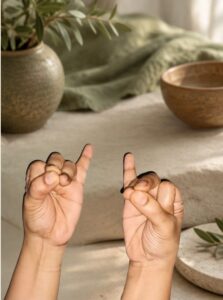
How to practice?
Join thumb, middle and ring fingertips; touch tip of index at the bottom of thumb and extend little fingers.
Conclusion
Apan Vayu Mudra, also known as Mrit-Sanjeevani Mudra, holds an interesting place in traditional yogic practices. Its simple finger arrangement and association with heart wellness have made it a popular mudra.
While it can be explored as a mindful relaxation practice, we must understand the difference between traditional beliefs and scientifically established medical treatments.
Your heart deserves care, awareness and timely medical attention. Never let a home remedy or yogic practice delay emergency treatment.
Practise yoga wisely. Respect tradition. Stay informed. And remember that prevention and timely medical care go hand in hand.
Medical Disclaimer: This article is intended for educational and general wellness purposes. Apan Vayu Mudra is not a proven treatment for heart disease, heart attacks or cardiac arrest. It is not a substitute for medical advice, diagnosis, medication or emergency treatment. Always consult a qualified healthcare professional regarding heart-related symptoms or concerns.